 Auto Encyclo Welcome To Auto Encyclo site for reviews car
Related Articles


Shopping for a midsize electric sedan in 2026 often ends at the same fork in the road. One path is the Tesla Model 3—software-first, network-famous, constantly updated. The other is the Hyundai Ioniq 6—slippery aero design, button-friendly cabin ideas in places, and a different warranty and dealer philosophy. Both promise efficient miles. Only one will match how you charge, travel, and tolerate minimalist interiors.
Value is not only the lowest MSRP. It is the five-year stack of price, efficiency, charging access, insurance, service reality, residual risk, and whether you enjoy living with the car on a wet Tuesday. This comparison frames Tesla Model 3 vs Hyundai Ioniq 6 for buyers who want a clear decision process. Specs shift by trim and market; always verify the exact car on the lot. This is consumer education, not a sales contract.
Price, Trims, and What You Actually Pay
Starting prices for these rivals have sat in a broadly similar neighborhood in many markets, with the exact gap depending on incentives, destination fees, and which battery or drive layout you pick. The Model 3 lineup typically spreads from efficiency-focused rear-drive variants into dual-motor and performance-oriented versions. The Ioniq 6 likewise spans standard- and longer-range batteries with rear- or all-wheel drive, plus higher trims that pile on equipment.
Value buyers should compare like with like: long-range rear-drive against long-range rear-drive, AWD against AWD. A loaded Ioniq 6 Limited-type build can outprice a base Model 3 and vice versa once options land. Get insurance quotes on both VINs. EV premiums sometimes differ more than the sticker gap. Negotiate Hyundai more like a traditional dealer deal; Tesla pricing is usually more transparent and less haggle-driven, which some shoppers prefer and others do not.
Incentives and Total Drive-Away Cost
Eligibility for tax credits or local rebates can swing either way based on assembly, battery sourcing rules, and income caps in your jurisdiction. Confirm current rules before you fall in love with a configuration that does not qualify. A “cheaper” car that misses an incentive may lose the value fight overnight.
Efficiency, Range, and Real Trips
Both sedans are efficiency plays, not truck-shaped batteries on wheels. The Model 3 is frequently praised for strong real-world energy use and competitive range on highway-heavy routes, aided by thermal management and a mature powertrain software stack. The Ioniq 6 leans into extreme aerodynamics—its teardrop profile is not subtle—and can post excellent consumption figures, especially in mixed and urban cycles, with long-range rear-drive versions competing near the top of the class.
Your value answer depends on trip structure. If you regularly stack 200-mile interstate legs, prioritize independently measured highway range and sustained speed consumption for the exact wheel size on your build. Large wheels look good and often cost range. If your week is commute-plus-errands with home charging, a slightly shorter rated range may be irrelevant next to comfort and price.
Expert Insight From Road-Trip Planning
Brochure range is a starting point. Cabin heat in winter, sustained 75 mph, and headwinds matter more. Whichever car preconditions the battery more intelligently on the way to a DC charger will feel “faster” on a trip even when peak kilowatt numbers look similar on paper.
Charging Speed and Network Reality
The Ioniq 6, built on Hyundai’s 800-volt-capable architecture in key configurations, can accept very high DC power when the station and pack temperature cooperate, with rapid 10–80% sessions often cited as a strength. The Model 3 charges quickly on Tesla’s network with route planning that is still a benchmark for reducing range anxiety on long drives. Peak rate alone does not define the experience; the charge curve and how often you can find working stalls do.
Network access remains a practical value divider. Tesla drivers often lean on Superchargers with consistent plug standards and in-car routing. Ioniq 6 drivers typically use the broader CCS ecosystem in many regions, with adapters and plug standards evolving as North American charging converges around NACS over time—check what your model year includes. If you live in an apartment and depend on public DC, test the apps and stations on your real corridors before buying.
Home Charging Equalizes a Lot
With reliable Level 2 at home, both cars become easier and cheaper to “fuel.” Value then shifts toward efficiency, insurance, and residual estimates rather than public-network theater. Without home charging, network quality and DC pricing dominate the ownership math.
Cabin, Controls, and Daily Usability
Tesla’s minimalist cabin centers on a large central display. Climate, wipers, and many controls live in software menus or steering inputs that reward learning and frustrate some first-week owners. Over-the-air updates can improve the experience after purchase—part of Tesla’s value story. Material choices and ride tuning vary by model year refresh; sit in the newest version, not only an older loaner memory.
The Ioniq 6 offers a more conventional control philosophy in several areas, with a design-forward interior and packaging shaped by that sloping roof. Rear headroom and trunk openings can be more polarizing than a traditional three-box sedan; bring the family and the stroller for a reality check. Hyundai’s longer traditional warranty coverage on vehicle and battery in many markets is a tangible value point for buyers who dislike out-of-warranty surprises.
Cargo and Practicality
Model 3 typically offers a front trunk plus a more conventional rear hatch opening, useful for weekend bags and oddly shaped items. Ioniq 6 prioritizes aero style; test the trunk aperture with your luggage. Daily value includes whether groceries and kids’ gear fit without Tetris rage.
Software, ADAS, and Service Philosophy
Tesla’s driver-assistance branding and visualization are highly developed; capability and supervision requirements still demand an attentive human for normal consumer features. Hyundai’s assistance suite is competitive on hardware in many trims, with a different interface language and dealer-based service culture. Neither system makes the car fully autonomous. Test adaptive cruise and lane support on the same road if you can.
Service access shapes five-year value. Tesla’s service model is app-driven and mixed in owner satisfaction depending on location. Hyundai’s dealer network is broader in many regions for body work and routine under-warranty visits. If you live far from a Tesla service point but near several Hyundai dealers—or the reverse—let geography vote.
Residual and Depreciation Risk
EV residuals swing with incentives, new-model launches, and battery confidence narratives. Compare recent used values for similar age and mileage rather than assuming either badge is immune. A lower purchase price with weaker residuals can erase savings; a higher price with stronger demand can even out.
Which Offers Better Value for Whom?
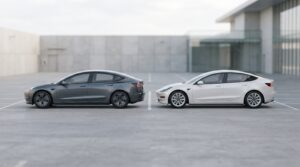
Choose the Model 3 if you prioritize charging-route confidence on Tesla’s network, frequent software evolution, strong efficiency, and a hatch-style practicality edge—and you accept a screen-centric cabin. Choose the Ioniq 6 if you want distinctive design, potentially blistering DC charge sessions on capable trims, a more familiar control layout in places, and Hyundai’s warranty posture—and you confirm rear packaging and local charging access fit your life.
If the monthly payment is nearly identical, decide on network and interface first. Those two factors determine whether you enjoy the car or merely endure it. Value is emotional reliability as much as spreadsheet math.
Hypothetical Buyer Profiles
A suburban owner with a garage and two long trips a year may be happy in either; pick the better insurance quote and the seat you prefer after an hour’s drive. An apartment resident on a Supercharger-rich corridor may lean Tesla. A buyer who wants steering-wheel stalks and a traditional service lane may lean Hyundai. Neither profile is wrong.
FAQ
Which is cheaper, Model 3 or Ioniq 6?
Starting prices are often close; compare matched trims, incentives, and insurance. The lowest MSRP is not always the lowest five-year cost.
Which has better range?
Long-range configurations of both are competitive. Check the exact trim’s rating and highway tests—wheel size changes results.
Which charges faster?
Ioniq 6 can hit very high DC peaks on capable hardware; Model 3 pairs strong charging with Tesla route planning. Real trips depend on station quality and preconditioning.
Which cabin will I prefer?
Tesla is minimalist and screen-heavy; Ioniq 6 is more design-led with different packaging tradeoffs. Sit in both.
Which is better for long road trips?
The one whose charging network and range at highway speeds fit your routes. Test planning tools before committing.
Is this a buying recommendation for everyone?
No. It is a decision framework. Verify 2026 specs, warranties, and prices in your market.
Value Is Fit, Not a Trophy Badge
Tesla Model 3 vs Hyundai Ioniq 6 is a close value contest in 2026 when you align trims and are honest about charging access. The Model 3 often wins on network integration and software cadence. The Ioniq 6 often wins on charge hardware potential, warranty posture, and a different daily interface. Your driveway and your preferred controls should cast the deciding votes.
Drive both on the same day, quote insurance on both, and map your real charging week. The better-value electric sedan is the one that still feels like a smart decision after the novelty wears off—not the one that won a comment-section argument.

