 Auto Encyclo Welcome To Auto Encyclo site for reviews car
Related Articles


Full-size trucks are sold with rodeo commercials and payload decals, then driven like tall sedans five days a week. You need the bed on Saturday and the back seat on Monday. Choosing between a Ford F-150 and a Chevrolet Silverado is less about which brand your uncle swears by and more about cab configuration, powertrain, ride, and whether the truck will still feel sane after a year of mixed duty.
Both nameplates dominate North American sales for good reason: broad configurations, serious towing capacity when properly equipped, and dealer networks that stock parts in places exotic brands forget. The better truck is the one that matches your hitch weight, crew size, and commute—not the one that wins a parking-lot horsepower argument. This showdown focuses on work capability and daily usability in plain language.
Configurations First: Cab, Bed, and Frame Purpose
Before badges, lock the silhouette. Regular cab, super/extended cab, and crew cab change who fits and how the truck parks. Bed lengths trade cargo volume for maneuverability. The F-150 and Silverado both offer deep menus here; mismatches create buyer remorse faster than any engine debate. Measure the garage, the job site gate, and the parking structure height.
Payload and tow ratings vary wildly within each brand by axle ratio, cab/bed combo, engine, and equipment packages. Never assume the brochure’s maximum applies to the truck on the lot. Check the door-jamb labels and the build sheet. A lightly optioned work truck and a luxury-trimmed crew cab share a name and little else in capability.
Expert Insight From Spec Sheets
We see more “wrong truck” purchases from cab/bed mistakes than from Ford-versus-Chevy loyalty. Bring tape measures and a honest list of what rides in the bed monthly. Configuration is destiny.
Powertrains: Gas, Turbo, Diesel, and Hybrid Paths
Ford’s F-150 range has long emphasized turbocharged six-cylinder options alongside V8 choices and hybrid variants, aiming for a blend of torque and efficiency depending on tune. Chevrolet’s Silverado counters with a mix of six- and eight-cylinder gas engines and diesel offerings in many model years, tuned for towing character and durability narratives of their own. Exact availability rotates with model years—verify the current order guide.
For daily commuting without a trailer, a smaller boosted engine or efficiency-focused setup can save fuel and still move the truck fine. For regular towing near the upper limit, prioritize cooling packages, the right axle ratio, integrated brake controllers, and transmission software designed for heat. Test-drive the specific engine; a smooth empty truck can feel different when you simulate a grade with realistic expectations.
Fuel Costs Are a Work Input
If you log 20,000-plus miles a year, a few MPG difference is real money. Hybrids and diesels change the math when they fit your duty cycle and local fuel prices. Calculate with your routes, not a highway-only fantasy.
Towing, Hauling, and Job-Site Manners
Both trucks can be serious tools when equipped. Compare integrated trailer technologies: camera views, blind-spot monitoring that includes trailer coverage where offered, and on-board scales or payload estimate features that reduce guesswork. Bed steps, stake pockets, spray-in liners, and power outlets matter more to trades than another leather color.
Four-wheel-drive systems should match terrain. Some buyers need crawl capability and locking devices; others need only occasional snow traction. Daily drivers in mild climates sometimes overbuy hardware they never use, adding weight, cost, and complexity. Be honest about dirt roads versus true off-highway work.
Hypothetical Work Week
You tow a mid-weight equipment trailer twice a week and carry lumber on Fridays, then drive kids on weekends. A crew cab with the mid-tier towing package and a proven engine will serve better than a max-tow hero trim that rides harshly empty. Buy the duty cycle, not the commercial.
Daily Driving: Ride, Cabin, and City Realities
Empty full-size trucks can ride firmly, especially on work suspensions and large off-road tires. Higher trims add adaptive dampers or comfort tuning that make weekday commuting less tiring. Sit in both F-150 and Silverado crew cabs back-to-back; seat shape and driving position are personal and more important than brochure adjectives.
Turning radius, hood length, and camera quality define city stress. Both brands offer multi-camera views and parking aids on upper trims that reduce low-speed scrapes. If you parallel park daily, prioritize camera clarity and smaller wheel packages. Huge wheels look tough and cost more when curbed.
Noise, Vibration, and Fatigue
Spend an hour at highway speed in each. Wind noise, seat support, and adaptive cruise quality decide whether you arrive ready to work or already tired. Daily use is mostly these miles—not the rare max-tow weekend.
Tech, Safety, and Ownership Friction
Infotainment reliability, wireless phone projection, and over-the-air update capability vary by year and trim within both lineups. Prefer physical controls for frequently used climate functions if you wear gloves on job sites. Safety suites—automatic emergency braking, blind-spot monitoring, lane support—should be standard or widely available; test alert sensitivity so you do not disable useful systems out of annoyance.
Service intervals, warranty terms, and dealer competence in your town influence uptime. A truck that is slightly “better” on paper but waits two weeks for a simple part is worse for business. Ask local fleets what they run and why. Anecdotes are not data, yet regional service reality is part of capability.
Resale and Fleet Perception
Both brands hold demand in the used market when clean and documented. High-trim fashion packages can be polarizing at resale; work-friendly options often age more gracefully for the next buyer. Keep maintenance records if the truck is a rolling business asset.
How to Choose Without Tribal Noise
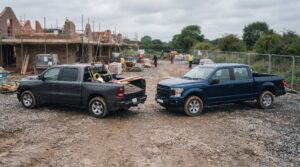
Pick Silverado if the specific cab/bed/powertrain combo fits better, the dealer experience in your area is stronger, or the driving position and controls suit you after a real test. Pick F-150 for the same reasons on the Ford side—especially if a particular hybrid or powertrain configuration matches your mix of commute and tow needs. Ignore internet loyalty tests that never weighed your trailer.
Build two identical mission profiles at each dealer: same cab, similar bed, comparable tow package, similar safety tech. Compare out-the-door price, payload/tow on the window sticker, and insurance quotes. Then drive both with the radio off. The quieter decision process usually produces the better ownership story.
A Compact Spec Checklist
Door-sticker payload. Configured tow rating. Axle ratio. Hitch and brake controller. Cab seating for your crew. Bed length for your materials. Camera and mirror trailer aids. Tire cost for the fitted size. Complete it before negotiating paint color.
FAQ
Which tows more, F-150 or Silverado?
It depends on configuration. Compare identically equipped trucks using official ratings for that build—not brand max headlines.
Which is better for daily commuting?
Higher-trim suspension setups and smaller wheel packages usually ride better empty. Drive both on your commute route.
Do I need four-wheel drive?
Only if weather or terrain demand it. Many urban owners pay for 4×4 they rarely engage.
Gas, diesel, or hybrid?
Match to mileage, tow frequency, and local fuel prices. There is no universal winner.
What matters most for work use?
Payload, tow rating for your trailer, bed practicality, uptime/service access, and upfitting options.
Is this a recommendation to buy one brand always?
No. It is a framework for matching truck to mission.
Spec the Mission, Then Pick the Badge
Ford F-150 vs Chevrolet Silverado is a close fight between two deeply capable full-size trucks. Work use demands honest payload and tow numbers. Daily use demands ride, cameras, and seats you can tolerate for hours. Either brand can win when the configuration is right—and either can frustrate when you buy the commercial instead of the job.
List your trailer weight, bed cargo, passenger count, and commute. Build matched trucks on both sides and drive them. The right showdown winner is the one that disappears into your week while still hauling like a tool when Saturday arrives.