 Auto Encyclo Welcome To Auto Encyclo site for reviews car
Related Articles

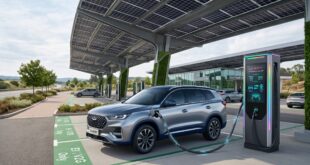

You want an electric vehicle that goes farther on a charge without carrying a massive, expensive battery pack. Range anxiety and high prices remain two of the biggest barriers for many buyers. General Motors just outlined its answer: a fourth-generation EV platform built around new battery chemistry, simpler drive units, and a much cleaner electrical architecture.
Revealed at the company’s GM Forward event in October 2026, the platform targets the highest-volume segments of the market. The goal is straightforward—deliver more range per kilowatt-hour, cut cost and weight, and make electric vehicles more practical for everyday buyers.
Lithium Manganese-Rich Batteries Take Center Stage
At the heart of the new platform sits lithium manganese-rich (LMR) prismatic cells. GM describes this as the world’s first production application of LMR chemistry. The company says LMR offers roughly 33 percent higher energy density than lithium iron phosphate (LFP) while approaching LFP’s lower cost level.
Higher density means engineers can achieve the same or better range with a smaller, lighter pack. GM’s early projections point to about 20 percent more range for every kilowatt-hour of energy stored. The cells will be produced by Ultium Cells, the joint venture with LG Energy Solution, at the Spring Hill, Tennessee plant, with volume production targeted for 2028.
Efficiency Gains Across the Vehicle
Battery chemistry is only one piece. GM redesigned the electric drive units and power electronics so each unit contains about 40 percent fewer parts. The motors and inverters are smaller and lighter, freeing space for passengers and cargo while reducing manufacturing complexity and cost.
Aerodynamics also improve. The company cites a 25 percent better aerodynamic performance figure for vehicles on the new platform. Combined with a roughly 15 percent reduction in overall vehicle mass and smarter energy management, the result is an expected 20 percent gain in efficiency compared with current GM EVs. In practical terms, that means either longer range from the same size battery or the ability to install a smaller, less expensive pack while still meeting range targets.
Cleaner Electrical Architecture and Far More Computing Power
The fourth-generation platform introduces a new centralized computing and electrical system. Wiring length and mass drop by about 30 percent. Fewer control modules simplify the vehicle and reduce potential failure points. At the same time, processing power jumps by a factor of 40, giving the car substantial headroom for AI features, over-the-air updates, energy optimization, and advanced driver-assistance functions.
This architecture is propulsion-agnostic. It will appear first on the 2028 Cadillac Escalade IQ and then spread across both electric and internal-combustion vehicles, including high-volume trucks and three-row SUVs. The same foundation is expected to support GM’s first eyes-off driving system.
Designed for Mainstream Segments
Previous GM EV platforms delivered capable vehicles, yet cost and complexity limited how widely they could scale. The fourth-generation approach deliberately targets the heart of the market—compact and midsize crossovers, mainstream trucks, and other high-volume products. By cutting parts, weight, and battery size while improving efficiency, GM aims to offer competitive range and features at more accessible price points.
The company has not yet named specific models or exact range figures. What it has emphasized is that the platform is engineered from the start for broad applicability rather than niche performance flagships.
What It Means for Buyers
If the projected gains materialize in production vehicles, drivers should see EVs that travel farther on less battery capacity. That combination lowers material costs, reduces vehicle weight, and can improve handling and efficiency. Fewer parts in the drive units and simpler wiring should also support better long-term reliability and lower repair complexity.
The centralized computer and increased processing power open the door to more capable software features over the life of the vehicle. Owners can expect smoother over-the-air updates, more responsive interfaces, and continued improvement in driver-assistance systems without needing a complete hardware redesign.
Looking Ahead to 2028 and Beyond
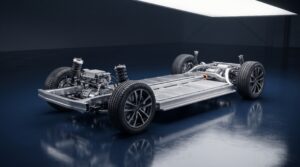
Volume production of the LMR cells is scheduled to begin in 2028, and the first vehicles on the new architecture are expected around the same timeframe. Between now and then, GM will refine the hardware, validate real-world range and durability, and prepare manufacturing at scale.
The fourth-generation platform represents a clear shift toward cost-efficient, high-volume electric vehicles. By focusing on battery chemistry that balances energy density and price, simplifying mechanical and electrical systems, and building in substantial computing reserves, GM is positioning itself for the next phase of EV adoption—when mainstream buyers expect both practicality and value.
For anyone watching the electric transition, the real test will be the first production vehicles that roll out of the plants. If they deliver the efficiency, range, and cost improvements outlined in 2026, the platform could become one of the more significant steps GM has taken toward making EVs everyday transportation for a much larger group of drivers.
FAQ
1. What is the main battery technology in GM’s fourth-generation EV platform?
Lithium manganese-rich (LMR) prismatic cells, which GM says offer higher energy density than LFP at a comparable cost.
2. How much more efficient will the new EVs be?
GM projects roughly 20 percent more range per kilowatt-hour, along with about 15 percent lower vehicle mass and 25 percent better aerodynamics.
3. When will vehicles using this platform go on sale?
Volume production of the LMR cells is targeted for 2028, with the first vehicles on the architecture expected around the same period. The electrical architecture debuts earlier on the 2028 Cadillac Escalade IQ.
4. Will the new platform only be used on electric vehicles?
The computing and electrical architecture is designed to roll out across both EV and gas-powered vehicles, starting with full-size trucks and three-row SUVs.
5. How does the new drive unit improve the vehicle?
It uses about 40 percent fewer parts, making the system smaller and lighter. That frees interior space and helps reduce cost and complexity.