 Auto Encyclo Welcome To Auto Encyclo site for reviews car
Related Articles

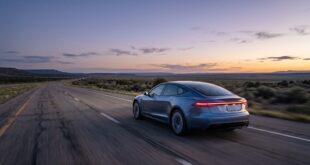

Every few months a keynote promises driverless cars “next year.” You open a ride-hailing app in your city and still see a human in the front seat—or no robotaxi option at all. The gap between autonomy marketing and what you can book on a Tuesday night is the real story of 2026.
Level 4 autonomy means the system can handle the entire driving task within a defined operational design domain—geography, speeds, weather, and conditions—without a human driver ready to take over inside that domain. Delivering it is less about a single viral demo and more about permits, mapped service areas, safety cases, and fleets that run daily. Here is how the race looks when you separate paid, driverless service from supervised pilots and consumer driver-assistance badges.
Level 4 Versus What Most People Buy
Most new cars offer Level 2 or “Level 2+” assistance: the vehicle steers and manages speed while you supervise. Level 3, where available, allows eyes-off under narrow conditions with a handover expectation. Level 4 removes the need for a driver in the operational domain; if the system cannot continue, it should achieve a safe state without relying on you as backup.
That distinction explains why robotaxis and autonomous freight programs dominate true L4 headlines, while private ownership of unsupervised L4 cars remains limited. Geofenced commercial service is where regulators, insurers, and operators can bound risk. Open-world, anywhere Level 4 for personal cars is a harder product.
Expert Insight From Deployment Teams
The companies “delivering” in 2026 are the ones collecting paid trips or commercial miles under driverless permits—not only the ones with the most aggressive keynote timelines.
Waymo: Scale Leader in U.S. Robotaxi Service
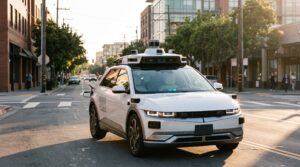
Alphabet’s Waymo remains the clearest large-scale example of public, fully driverless ride service across multiple U.S. metros. By 2026 reporting, the service had expanded into a double-digit set of cities, with weekly paid ride volumes in the hundreds of thousands and a multi-thousand-vehicle fleet class. Operations rely on a sensor-rich stack (including lidar) and carefully expanded service maps.
Waymo’s approach prioritizes city-by-city validation, remote assistance, and gradual ODD growth—including selective freeway access in some markets. For riders, “delivering” means you can open an app, take a trip with no safety driver, and pay. That bar is still rare globally.
Hypothetical Rider Check
You land in a Waymo city, request a ride inside the service area, and complete the trip without a human driver. That experience is the practical definition of L4 delivery for passenger service in 2026.
Tesla Robotaxi: Expanding, Still Catching Scale
Tesla has moved from supervised experiments to paid robotaxi operations in a smaller set of U.S. cities, with unsupervised service reported in key Texas markets and further cities announced or ramping. The strategy leans on camera-heavy autonomy and manufacturing scale, including purpose-oriented vehicles such as Cybercab alongside Model Y fleet cars.
On verified operational measures through 2026 coverage, Tesla’s robotaxi footprint and trip volumes remained behind Waymo’s established network, while expansion speed and cost structure stayed central to the bull case. Regulatory attention on vehicle design and unsupervised operation continues alongside commercial rollout. Delivering L4 here is real where unsupervised paid rides run—and still early relative to the broadest competitor footprint.
Expert Insight on Two Strategies
Lidar-and-map-heavy stacks and camera-fleet-learning stacks are competing philosophies. 2026 rewards whoever converts philosophy into reliable, permitted, high-utilization miles.
Zoox, Uber Partnerships, and Other U.S. Players
Amazon-owned Zoox has pursued purpose-built bidirectional robotaxis and commercial presence in markets such as Las Vegas under its own permits. Uber’s role is increasingly distribution and partnership—working with autonomy providers rather than only building a single in-house stack—while Motional and other partners appear in permit and deployment narratives.
GM’s Cruise, once a headline U.S. robotaxi contender, is no longer the center of the 2026 scale conversation after earlier operational and regulatory setbacks. The lesson for the industry is blunt: permits can be revoked, public trust is fragile, and recovery is slow.
Traditional Automakers: Partnerships Over Solo L4 Fleets
Mercedes-Benz, BMW, and peers have invested heavily in advanced assistance and, in some cases, Level 3 highway features. Industry commentary in 2026 also notes a pragmatic shift: some premium brands emphasizing refined Level 2+ breadth over pushing Level 3 consumer products that proved narrow or costly to maintain.
For Level 4, many OEMs prefer alliances—pairing vehicles with autonomy software firms (for example, Wayve-linked programs with Mercedes and others) or regional robotaxi partners such as Momenta collaborations outside the U.S. Stellantis–Wayve–Uber style agreements sketch future L4 robotaxi supply chains rather than mass private L4 ownership tomorrow morning. “Delivering” for these brands often means production agreements and pilots, not yet Waymo-scale driverless fleets.
Compact Scorecard Mentality
Paid driverless rides in public service areas: strongest proof. Commercial driverless freight corridors: strong proof in a different domain. Consumer cars with unsupervised L4 anywhere: largely not the 2026 mass-market reality. Supervised assistance with a marketing name: not Level 4.
China and International Deployments
China remains a major arena for commercial robotaxi activity, with operators such as Baidu Apollo Go and others running driverless services in multiple cities under local rules. Gulf cities have hosted commercial and pilot robotaxi programs involving global and regional partners. Europe progresses more cautiously through permits, type approval frameworks, and corridor projects—including autonomous freight milestones such as cab-less Level 4 truck operations under strict German approval processes.
Global delivery is therefore multi-polar. No single automaker “owns” L4 worldwide. Operators, tech firms, and OEMs share the stack differently by country.
Freight: Quiet Level 4 Miles That Matter
While passenger robotaxis dominate consumer attention, autonomous trucking programs continue commercial driverless runs on defined highway corridors in the U.S., with companies such as Aurora and Kodiak frequently cited in unsupervised freight progress. In Europe, Einride’s logistics deployments and OEM partnerships illustrate how L4 can arrive first as a goods-movement tool under constrained routes.
If you judge the race only by downtown robotaxis, you miss a large share of real unsupervised miles. Hub-to-hub freight ODDs can be narrower—and that narrowness is exactly what makes Level 4 deployable sooner.
FAQ
Who is actually delivering Level 4 passenger service in 2026?
In the U.S., Waymo leads in multi-city paid driverless scale; Tesla and Zoox operate in more limited footprints; China and some other countries host additional commercial services.
Is Tesla FSD on consumer cars Level 4?
Consumer supervised systems are not the same as permitted driverless robotaxi service. Level 4 requires the system to handle the ODD without a driver as backup.
Can I buy a Level 4 personal car and go anywhere?
Not as a mainstream, unlimited product in 2026. Commercial L4 is largely geofenced and fleet-operated.
Why do traditional automakers seem slower?
Liability, regulation, and brand risk push many toward partnerships and incremental ADAS while specialists absorb early robotaxi scaling pain.
Does Level 4 mean zero crashes?
No. It means automated performance within a defined domain under a safety case—not magical perfection.
Is this investment or legal advice?
No. It is a technology landscape overview. Capabilities and permits change by city and month.
Judge Autonomy by Trips, Not Trailers
The race for Level 4 autonomy in 2026 is being won in places where you can hail a driverless ride or move freight without a human in the cabin—under real permits and real operational maps. Waymo sets the current U.S. passenger-scale benchmark; Tesla is commercializing and expanding with a different technical bet; Zoox and global operators add purpose-built and regional pressure; freight programs quietly accumulate unsupervised corridor miles; traditional automakers mostly partner and prepare platforms.
If you care who is “actually delivering,” ignore the next stage demo and ask three questions: Is there a public paid driverless service? How large is the active domain? How many trips or commercial loads run weekly? Those answers cut through the noise—and they are the only scoreboard that matters when the keynote lights go down and the city still has to work at 8 a.m. tomorrow.